
Can You Trust AI for Louisiana Workers’ Compensation Advice?
More and more calls to my Madisonville office are starting the same way. Someone has already asked ChatGPT, Gemini, or another AI tool about their legal problem. They’ve read the answer, done a little more research, and now they want to know why I’m telling them something different.
I see it across my practice, from workers’ compensation claims to personal injury cases and VA disability appeals. Sometimes the person is genuinely confused. Other times, they’re convinced the AI is right and I’m wrong.
I understand the appeal. You got hurt at work, the insurance company isn’t returning your calls, and you’re worried about how you’re going to pay your bills. Meanwhile, an AI chatbot is available at 2 a.m., answers your questions in seconds, and doesn’t send you a bill.
I’d probably do my homework, too.
But there’s a difference between understanding what Louisiana law generally says and knowing how that law applies to your particular situation.
AI tools can help you understand Louisiana workers’ compensation law, but they aren’t a substitute for an attorney reviewing your specific claim. Their answers may overlook critical evidence, confuse different legal procedures, rely on outdated court decisions, or accept assumptions in your questions that aren’t legally correct.
And when you’re hurt and out of work, those missing details can cost you.
Here are three examples drawn from actual conversations I’ve had with people about their workers’ compensation claims. I’ve omitted identifying information, but the misunderstandings are real.
When AI Gets the Law Right but Your Case Wrong
“AI Says My Workers’ Comp Check Should Be Higher.”
In Louisiana, the amount of your weekly workers’ compensation check generally depends on your average weekly wage (AWW) and the type of disability benefits you’re receiving. The Louisiana Workers’ Compensation Act establishes how those wages are calculated, and the rules can vary depending on how you were paid.
One client came to me convinced his check was wrong.
He’d suffered two separate work-related accidents on two different dates. After researching his situation, he believed he should be able to use whichever accident date produced the higher average weekly wage. He also wanted the dispute handled through an expedited hearing.
There were two problems with that.
First, the date of an accident isn’t something you get to choose based on which one produces the better benefit amount. The applicable accident, the wages associated with it, and the medical evidence connecting the injury to that accident all matter.
Second, he was confusing two different workers’ compensation procedures.
Under Louisiana Revised Statute 23:1121, an injured worker generally has the right to select one treating physician in any field or specialty. If that initial choice is denied, the law provides a specific expedited hearing procedure. The judge must set a hearing date within three days of receiving the motion, with the hearing itself generally held between 10 and 30 days after the motion is filed.
That doesn’t mean every dispute over workers’ compensation benefits qualifies for the same expedited process.
An AI tool might correctly explain both rules separately. But when someone combines them in a question, the response may fail to recognize that the underlying assumptions are wrong.
That’s the problem I keep encountering. The answer sounds reasonable. The legal terminology sounds right. But the conclusion doesn’t fit the facts.
“AI Says They Can’t Prove Fraud Against Me.”
Louisiana takes workers’ compensation fraud seriously.
Under La. R.S. 23:1208, a willful false statement or representation made for the purpose of obtaining workers’ compensation benefits can result in forfeiture of benefits.
A client came to me facing a serious fraud allegation. She’d asked an AI tool whether the insurance company had enough evidence to prove its case, and the response gave her reason to believe the allegations wouldn’t hold up.
There was just one problem.
The AI hadn’t reviewed her deposition testimony. It hadn’t compared her statements against her medical records. And it hadn’t considered some of the evidence the insurance company could use against her.
I had.
When I showed her the evidence, the situation looked considerably different from the one the chatbot had described.
To be fair, AI can analyze legal documents and identify potential inconsistencies when it’s given the right information. But it can’t evaluate evidence it hasn’t seen, and even a detailed AI analysis can misunderstand the significance of testimony, medical records, or conflicting facts.
There’s also a legal distinction between an inaccurate statement and a willful misrepresentation made for the purpose of obtaining benefits. Determining whether the evidence establishes a violation requires applying the law to the actual circumstances.
An AI answer based only on your description of events isn’t an independent evaluation of your case. It’s an analysis built around whatever information you provided, whatever assumptions the system made, and whatever legal authorities it relied upon.
Those are important limitations when your benefits are on the line.
“AI Says I’m Entitled to Workers’ Comp Benefits for Life.”
Another client asked AI something along the lines of, “If I can never go back to work, am I entitled to workers’ compensation benefits for life?”
The answer was essentially yes.
And under certain circumstances, that can be correct.
Louisiana provides permanent total disability (PTD) benefits for qualifying injured workers. Those benefits can continue for the duration of the disability, potentially for life.
But saying you can’t return to work and proving that you qualify for permanent total disability benefits are two very different things.
Under La. R.S. 23:1221, a worker seeking permanent total disability benefits must meet a demanding standard. The law requires clear and convincing evidence that the worker is physically unable to engage in any employment or self-employment, subject to the statute’s specific requirements.
Not just the job you had before your accident. Not just the type of work you’ve always done.
The law considers a much broader range of potential employment, even circumstances where someone might be working through pain.
And qualifying for benefits doesn’t mean the insurance company can never challenge your entitlement again.
Depending on the circumstances, a claim may involve examinations by physicians selected by the insurer, independent medical examinations when medical opinions conflict, or vocational rehabilitation efforts to evaluate your ability to work.
Those disputes can have enormous consequences. When benefits are reduced or terminated, injured workers and their families may face significant financial pressure while trying to challenge that decision.
I’ve written about how that pressure can affect injury claims in my article on legal starvation and its impact on injured claimants.
None of this means an injured worker can never qualify for lifetime benefits.
It means an AI response that begins by accepting “I’ll never work again” as an established fact may skip the very legal and medical questions that determine whether those benefits are available.
What Happens When AI Relies on Outdated Louisiana Law?
Here’s an example I’m particularly familiar with, because I argued the case myself.
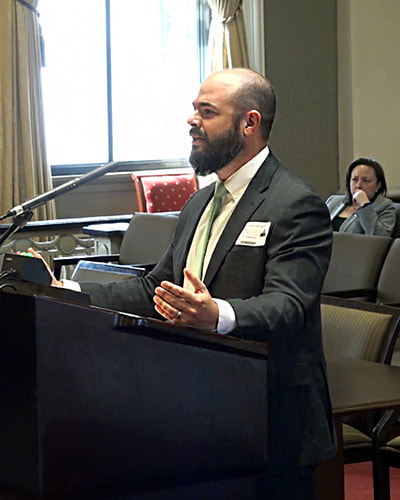
On June 29, 2026, the Louisiana Supreme Court issued its decision in Cousain v. Smitty’s Supply, Inc., a workers’ compensation case in which I represented the injured worker.
The dispute involved a question that had divided Louisiana appellate courts for years: When an injured worker willfully makes a false statement to obtain workers’ compensation benefits, does the resulting forfeiture apply only from the date of that misrepresentation, or can it reach backward and eliminate benefits the worker had already earned?
That distinction matters.
An injured worker could have a legitimate entitlement to benefits for a period of time, then later make a willful misrepresentation in violation of Louisiana’s workers’ compensation fraud statute.
Should that later misconduct erase benefits the worker was legally entitled to before the false statement occurred?
Different Louisiana appellate courts had reached different conclusions.
The Supreme Court resolved the disagreement, holding that forfeiture under La. R.S. 23:1208 applies prospectively from the time of the willful misrepresentation. It does not retroactively eliminate benefits the worker was entitled to before the misrepresentation.
That ruling clarified how the law must be applied across Louisiana.
Now consider what happens when someone asks ChatGPT about workers’ compensation fraud forfeiture.
The AI might find an older appellate decision that supports retroactive forfeiture. It might summarize a legal article written before June 2026. Or it might correctly quote the fraud statute without recognizing that the Louisiana Supreme Court has since resolved the dispute over how that provision operates.
The answer could look thoroughly researched, complete with legal citations, and still lead someone to the wrong conclusion.
This isn’t a hypothetical concern about how AI might misunderstand complicated legal language. It’s an example of why the most current controlling legal authority matters, and why simply finding a court decision that appears to support your position isn’t always enough.
Even an AI system capable of searching the web can overlook a controlling decision, confuse it with an older ruling, or misapply it to a different set of facts.
A lawyer’s job isn’t simply to find a statute or case that sounds relevant. It’s to understand which law controls, what the courts have actually decided, and how those decisions affect the person sitting across the desk.
How AI Can Actually Help With Your Workers’ Comp Claim
I’m not telling you to stop using AI.
ChatGPT, Gemini, and similar tools can be genuinely useful when you’re trying to understand unfamiliar legal terminology or organize information about your injury.
The trick is knowing what to ask.
Instead of asking AI to decide whether you’re entitled to benefits, predict how a judge will rule, or tell you what your claim is worth, try putting it to work on tasks that will help you prepare for a conversation with an attorney.
Here are two prompts worth trying.
1. Build a Timeline of Your Injury and Treatment
A workers’ compensation claim can involve months of medical appointments, missed work, communications with an insurance company, and paperwork. Keeping track of everything can get complicated.
Try copying this prompt into your preferred AI tool:
Example prompt: injury and treatment timeline
I’m preparing to meet with a Louisiana workers’ compensation attorney about an injury I suffered at work. Help me create a chronological timeline template that I can fill out myself. Include the date of injury, when I reported it to my employer, medical appointments, diagnoses, work restrictions, missed work, benefit payments, and communications with the insurance company. Don’t assume or invent any facts. Leave space for dates, notes, and documents I should locate.
The result can give you a useful starting point for organizing your records. Fill it out using your actual information and documents, then bring it to your consultation.
2. Prepare Questions for Your Attorney
You don’t need to understand every detail of Louisiana workers’ compensation law before calling a lawyer. But a good list of questions can make that first conversation a lot more productive.
Try this:
Example prompt: questions for your attorney
I’m getting ready for a free consultation with a Louisiana workers’ compensation attorney. Create a checklist of questions I should consider asking about my claim. Cover medical treatment, choosing a doctor, lost wages, benefit payments, insurance company disputes, and what I should do next. Explain any unfamiliar legal terms in plain English. Don’t give me a legal opinion about my specific case or assume I’m entitled to particular benefits.
You may discover questions you hadn’t thought to ask. That’s where AI can be helpful: getting you organized so you can make better use of your time with someone who can actually evaluate your claim.
One Important Warning: Protect Your Personal Information
Before you start typing your entire medical and employment history into an AI chatbot, remember that you’re sharing information with a technology service, not necessarily communicating confidentially with your attorney.
Don’t upload medical records, Social Security numbers, insurance claim documents, deposition transcripts, or other sensitive case materials into a public AI chatbot.
AI services have different privacy policies, retention practices, and controls over how information is processed. Those protections are not necessarily the same as the legal confidentiality obligations that apply to your attorney.
You also don’t need to identify your employer, insurance company, doctors, or coworkers to use either of the prompts above.
Keep the questions general. Let AI create blank templates and checklists, then fill in the private information yourself.
And don’t assume that something becomes protected by attorney-client privilege simply because you’re using AI to research a legal issue. If you already have an attorney, ask before sharing case materials with an outside AI service.
Use AI to help you prepare. Let your attorney help you evaluate what the information means for your claim.
Do I Need a Lawyer for Workers’ Comp?
People frequently ask me, “Do I need a lawyer for workers comp?”
The answer is: not everyone needs an attorney for every stage of a workers’ compensation claim.
If your benefits are being paid correctly, your medical treatment is being approved, and everything is proceeding smoothly, you may not need legal representation right now.
But if your weekly checks seem wrong, the insurance company is denying treatment, there’s a disagreement about your choice of physician, you’ve been accused of fraud, or someone is questioning your ability to return to work, those are situations where getting legal advice can make an important difference.
And you don’t necessarily need to wait until something goes wrong.
Some of the most consequential decisions happen early in a claim, before an injured worker realizes there’s a dispute. Understanding your rights and obligations from the beginning can help you avoid problems that become harder to resolve later.
The same applies if you’ve been researching your situation with AI and something doesn’t add up.
You don’t need to choose between doing your own homework and talking to an attorney. Both can be part of making an informed decision.
Frequently Asked Questions About AI and Workers’ Compensation
Can ChatGPT give accurate Louisiana workers’ compensation advice?
ChatGPT can provide accurate general information about Louisiana workers’ compensation statutes, benefits, and procedures. However, its responses can also contain errors, rely on outdated legal authorities, or overlook details that determine how the law applies to your case. It should be treated as a research tool rather than a substitute for individualized legal advice.
Can AI calculate my Louisiana workers’ compensation benefits?
AI can explain the concept of average weekly wage and demonstrate how benefit calculations work. But the correct calculation depends on factors such as your earnings history, how you were paid, the applicable accident, the type of benefits involved, and statutory limitations. An attorney can review the supporting records to determine whether the insurer’s calculation is correct.
Can AI use outdated Louisiana workers’ compensation laws?
Yes. An AI tool may rely on older statutes, court decisions, or commentary, even when newer controlling authority exists. The Louisiana Supreme Court’s June 2026 decision in Cousain v. Smitty’s Supply illustrates why the most current interpretation of the law matters.
Should I talk to a lawyer if AI says I don’t need one?
If your claim involves denied benefits, disputed medical treatment, a fraud allegation, or uncertainty about your rights, speaking with an attorney can help you evaluate the situation. An AI response shouldn’t be the sole reason you decide against getting legal advice, particularly when the consequences could affect your income or medical care.
Bring Your AI Answers. We’ll Go Through Them Together.
If you’ve researched your claim with ChatGPT or another AI tool and something I tell you doesn’t match, that’s okay. Bring the answer with you.
Print it out. Pull it up on your phone. Show me the statute, court decision, or explanation that led you to believe something different.
We’ll go through it together.
Sometimes the AI got it right. Sometimes it got part of it right but missed a critical detail. And sometimes the answer is simply wrong.
I’m not interested in winning an argument with a chatbot. I’m interested in making sure you understand your rights, the challenges your claim may face, and the options available to you.
AI can help you ask better questions. But it won’t review your case as your attorney, develop your legal strategy, or stand beside you when your claim goes before a workers’ compensation judge.
If you have questions about a Louisiana workers’ compensation claim, call Villeret Law Firm at (985) 327-2601 or schedule a free case consultation.
Let’s figure out what the law actually means for your situation.

Disclaimer: This article provides general information about Louisiana workers’ compensation law and is not legal advice about your individual circumstances. Reading this article or using the example AI prompts does not establish an attorney-client relationship.